
Customer-owned systems
Channels, helpdesk, CRM, ERP, operational APIs, and data sources continue to own their domain records and delivery contracts.
Integration ecosystem
OpenOS is designed to receive operational evidence and execute authorized actions without taking ownership of your telephony, messaging provider, helpdesk, CRM, ERP, or data system.
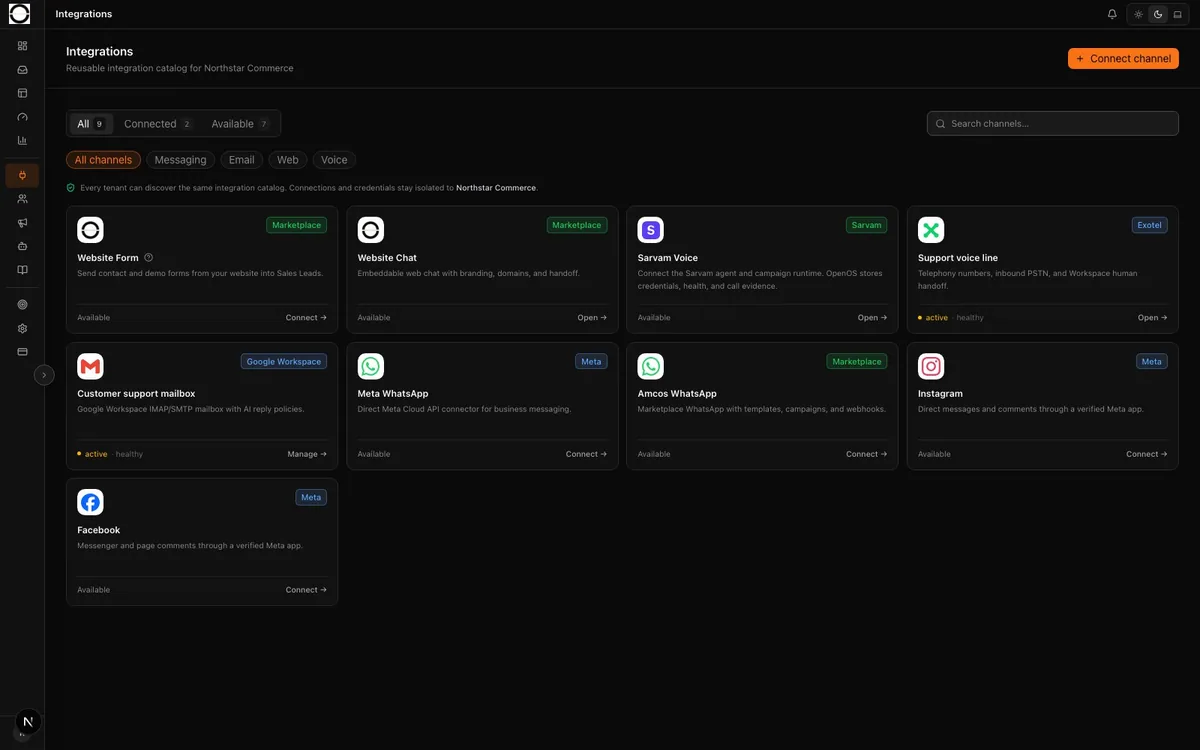 01 Catalog 02 Connection health
 Integration ecosystem
Connect through provider APIs, webhooks, and scoped implementation.
 Zendesk
  Freshdesk
  ServiceNow
  Genesys
  NICE CXone
  Five9
Five9  Talkdesk
  Twilio
  Gupshup
  Exotel
  Infobip
  Sinch
Sinch  Meta / WhatsApp
  Sarvam AI
  Salesforce
  SAP
SAP  Oracle
  Microsoft Dynamics 365
  HubSpot
  Zoho
Zoho  Shopify
  Tally
Tally Logos identify commonly operated systems, not partnerships or preconfigured native connectors. Connection scope depends on provider APIs, permissions, credentials, and deployment requirements.
The connection model
Each connection defines what enters OpenOS, which action may leave, and which external system remains authoritative.
Channels, helpdesk, CRM, ERP, operational APIs, and data sources continue to own their domain records and delivery contracts.
Normalize events, preserve provenance, monitor health, correlate operational patterns, and apply tenant and workflow controls.
The configured owner executes the action. OpenOS records the request and resulting evidence where the connection supports it.
Connection mechanisms
The site distinguishes implemented paths from the broader systems that can be connected through scoped work.
Implemented paths cover web chat, website forms, Google Workspace email, and Amcos WhatsApp. Meta WhatsApp is activated with the required customer credentials and provider approval.
Sarvam managed voice and Exotel paths are enabled through controlled provider configuration, preflight, and customer acceptance.
Scoped HTTPS APIs, webhooks, scheduled JSON ingestion, and governed HTTP tools connect systems that do not yet have a packaged adapter.
Scheduled HTTPS JSON pulls, scoped push APIs, and controlled imports bring eligible completed interactions into Quality.
Tenant-scoped HTTPS tools use secret references and node/revision grants for authorized workflow actions.
CRM, helpdesk, ERP, and data-system connectivity is scoped against the provider API, objects, permissions, and acceptance criteria.
Channel responsibility
Inbound evidence, workflow, contextual handoff, delivery state where supported, and configured Quality eligibility.
Inspect WhatsApp responsibilities → VoiceOpenOS governs audience, consent, provider readiness, evidence, exceptions, and outcome reconciliation.
Inspect voice responsibilities → EmailImplemented Google Workspace ingestion, threading, reply policy, human review, closure, and Quality handoff.
Inspect email responsibilities →Connection readiness
Before a connection is represented as ready, the deployment should establish the object scope, direction, authentication, tenant boundary, provider prerequisites, health check, failure behavior, and acceptance evidence.
Signals read, actions permitted, objects, volume, and cadence.
System of record, provider owner, approvals, consent, and retention.
Idempotency, health, retry, reconciliation, and degraded behavior.
Customer credentials, provider approval, controlled tests, and production sign-off.
Direct answers
No. The ecosystem wall represents systems OpenOS is designed to connect through provider APIs, webhooks, and scoped implementation. It does not imply partnership, certification, or out-of-the-box availability.
No. The telephony, BSP, mailbox, CRM, ERP, and other system contracts remain customer-owned.
The strongest current product paths include web chat, website forms, Google Workspace email, and Amcos WhatsApp, with controlled or gated Meta, Exotel, and Sarvam paths. Exact tenant activation still requires configuration and acceptance.
Yes, through configured provider adapters or governed HTTPS tools with the required credentials and grants. A generated recommendation is not represented as execution evidence.
Tailored walkthrough
We will map what OpenOS reads, what it may write, which provider executes, and what evidence returns—before discussing implementation.
Prefer email? sales@openost.com