Enterprise Operational Intelligence Platform

Your systems record work.
Leadership still guesses.

OpenOS sits above the enterprise stack and continuously understands operations — so executives know what changed, why it changed, who owns it, and what should happen next.

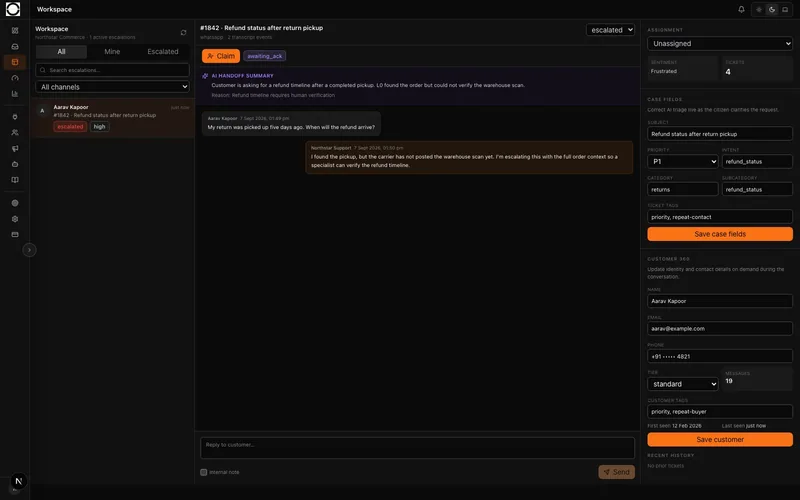
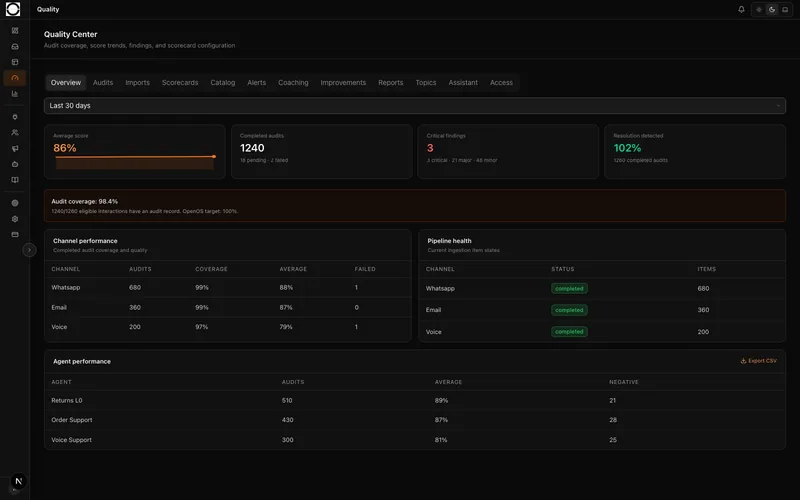
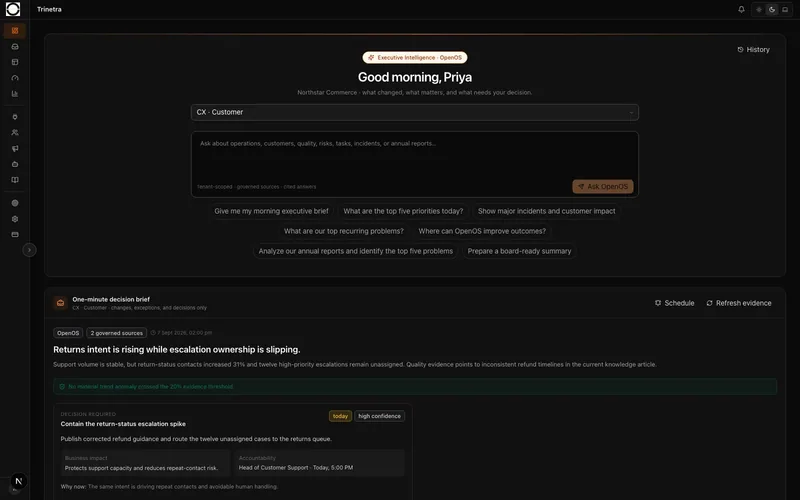
Executive Home Live preview

Executive Home — what leadership sees first. Illustrative preview.

The enterprise problem

Why today’s enterprise stack still leaves leaders guessing

Enterprises run more software than ever. Operational awareness has not kept up.

ERP

Records transactions. Does not explain operational risk across the business.

CRM

Tracks relationships. Does not see the queues, capacity, and back-office lag behind them.

HRMS

Manages people data. Does not connect workforce reality to service and process outcomes.

Business Intelligence

Explains yesterday. Leaders need to act on what is drifting now.

Dashboards

Show metrics in silos. They do not produce decisions with owners and due dates.

AI Assistants

Answer when asked. They do not continuously understand enterprise operations.

The result is familiar: more reports, more tools, and the same executive question — what is actually going wrong, and who is accountable?

That gap is why Enterprise Operational Intelligence exists.

The category

What is Enterprise Operational Intelligence?

The continuous ability to understand operations across systems — what changed, why it changed, who owns it, and what should happen next — before failure becomes a dashboard headline.

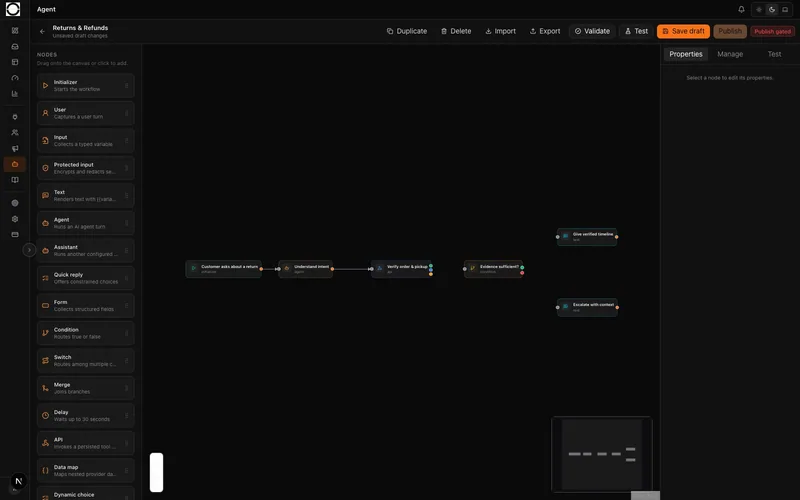
Illustrative governed Decision Card with issue, evidence, impact, recommendation, owner, due date, confidence, and status
Issue. Evidence. Impact. Recommendation. Owner. Due date.

How it fits

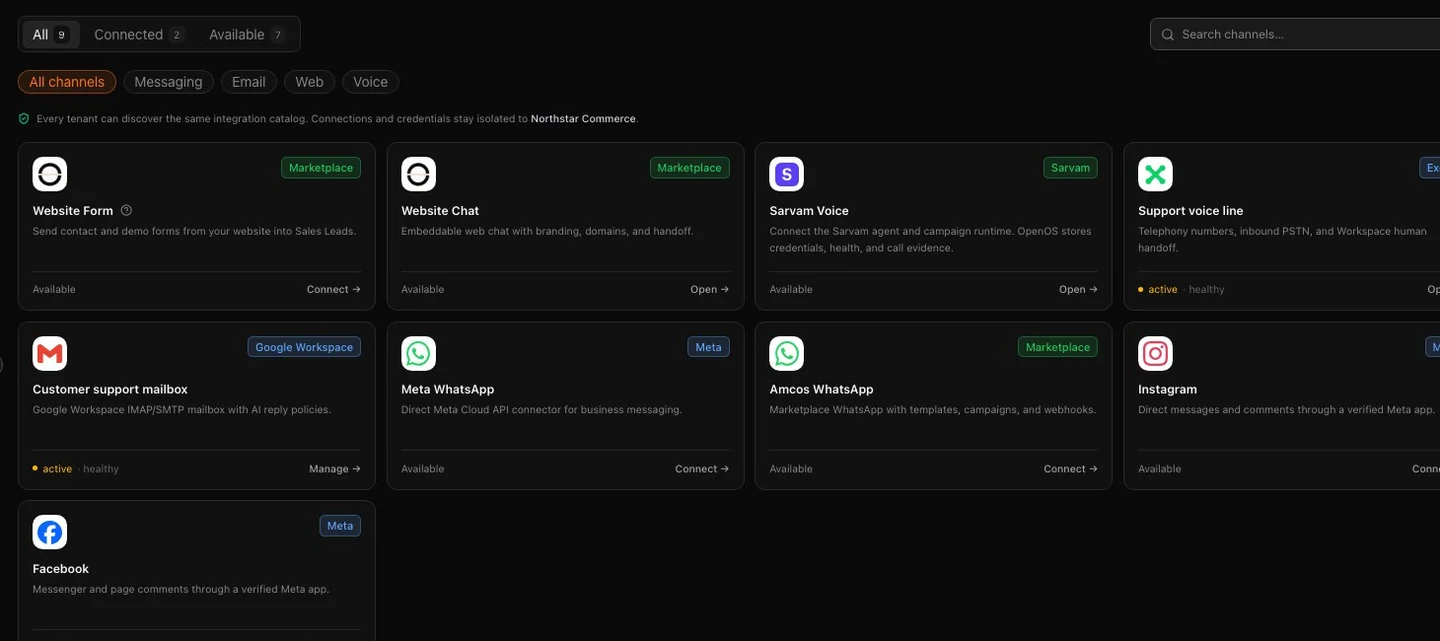
How OpenOS fits into existing enterprise systems

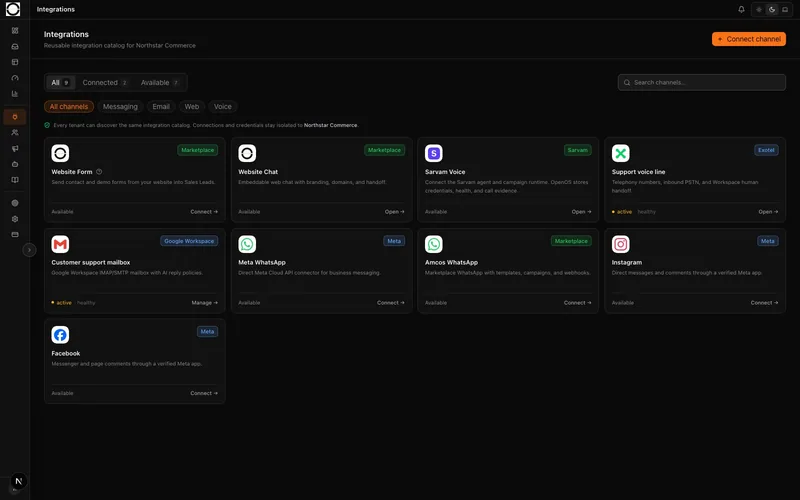
OpenOS does not replace your stack. It sits above it — as the intelligence layer.

  1. Enterprise Systems
  2. OpenOS
  3. Governed Decisions
  4. Business Outcomes

CRM · ERP · HRMS · channels · ticketing remain where they are. OpenOS adds continuous understanding and accountable decisions on top.

Works with your operating reality Cloud · Private cloud · Hybrid · VPC · On-premises
Governed where it matters Traceable evidence · Role-based access · Human approval
Review the Trust Center →

Business outcomes

What changes after adoption

The operating model moves from assembling answers to acting on them.

From fragmented visibility

One operational picture

Leadership sees what is happening across systems—not twelve separate versions of it.

From intuition alone

Evidence-backed decisions

Every recommendation carries the context, impact, and next action behind it.

From lagging indicators

Earlier warning

Operational drift becomes visible before customers, regulators, or boards feel it.

From ambiguous ownership

Named accountability

Material decisions leave the room with an owner, a due date, and a status.

From functional silos

Organizational alignment

Technology, operations, and leadership work from the same operational truth.

From report assembly

Faster execution

Teams spend less time constructing the picture and more time changing the outcome.

Book a demonstration

See OpenOS on your enterprise stack.

A focused briefing for CIO, CTO, and COO teams. We show how OpenOS sits above your systems — and what leadership would see first.

30 minutes Problem, fit, and live walkthrough
Your context Systems, industry, and priorities
Next step Clear path for a buying committee

Your request opens in your email client, ready to send to our team.