
Consent and audience
Campaign scope, consent, and audience snapshot are governed before provider execution.
Channel / Voice
Direct answer
OpenOS governs campaign intent, consent, provider configuration, evidence, exceptions, and outcomes while the selected voice provider owns live delivery, media, retries, and concurrency.
 01 Voice readiness
 Voice boundary
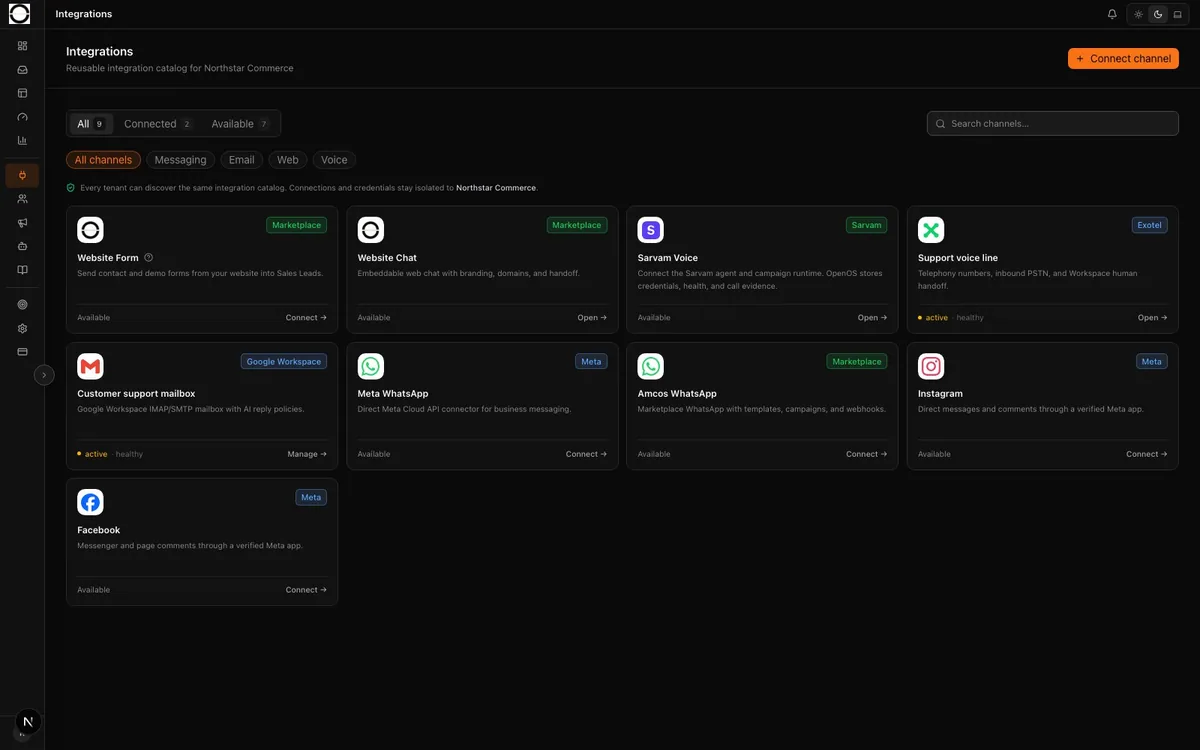
OpenOS uses provider adapters and controlled activation to govern the operational intent and resulting evidence while the provider remains responsible for live voice execution.
Campaign scope, consent, and audience snapshot are governed before provider execution.
Credentials, deployment binding, preflight, and customer acceptance gate activation.
Attempts, normalized outcomes, transcripts, recording references, and exceptions return to OpenOS where supported.
Mechanism
Define the workflow or campaign, audience, consent basis, and required approval controls.
Validate the configured provider deployment, credentials, and operational readiness.
The provider owns live calling, media, retries, and concurrency within its contract.
OpenOS records attempts, evidence, exceptions, normalized outcomes, and follow-through.
Operational control
The site distinguishes implemented architecture from broad production availability.
Implemented for controlled provider activation, deployment binding, preflight, campaign evidence, and reconciliation.
Implemented and acceptance-gated; advanced transfer and CTI capabilities depend on provider contracts and live validation.
Availability, consent, retention, and access remain subject to provider capability and customer policy.
Failed attempts, unresolved outcomes, and handoff requirements become operational evidence rather than disappearing in provider reports.
Channel scenario
The customer approves the audience, consent basis, provider deployment, and workflow.
The provider conducts the live call and controls media delivery.
Attempt, transcript/recording references, outcome, and exception state return where supported.
OpenOS routes exceptions and frames repeated patterns for operational review.
Measures
Configured deployment and preflight requirements satisfied for the selected voice path.
Provider attempts matched to normalized OpenOS outcomes and evidence.
Unresolved provider or customer exceptions awaiting owned follow-through.
Direct answers
The preferred managed-provider contract keeps live media and delivery with the provider. Some legacy or controlled paths have different implementation boundaries, which are scoped explicitly.
Potentially, through an available adapter or a scoped API/provider implementation. Availability is validated during the deployment design.
Tailored walkthrough
A tailored walkthrough for Support/CX, operations, and technology leaders—using your channels, responsibilities, and success measures.
Prefer email? sales@openost.com